LeTreez
A company delivers unique designs, refined craftsmanship premium corporate gifts. All our products predominantly are designed, crafted and manufactured with superior quality veneer wood for our 2D art pieces and 3D miniature models.
The orangutans are three extant species of great apes native to Indonesia and Malaysia. Orangutans are currently only found in the rainforests of Borneo and Sumatra. They were divided into two species: the Bornean orangutan and the Sumatran orangutan.The orangutans are the only surviving species of the subfamily Ponginae. The ancestors of the Ponginae split from the main ape line in Africa 16 to 19 million years ago and spread into Asia. Orangutans are the most arboreal of the great apes and spend most of their time in trees. Their hair is reddish-brown, instead of the brown or black hair typical of chimpanzees and gorillas. Dominant adult males have distinctive cheek pads and produce long calls that attract females and intimidate rivals. Orangutans are the most solitary of the great apes, with social bonds occurring primarily between mothers and their dependent offspring, who stay together for the first two years. Fruit is the most important component of an orangutan’s diet; however, the apes will also eat vegetation, bark, honey, insects and even bird eggs. They can live over 30 years in both the wild and captivity. There may even be distinctive cultures within populations. Human activities have caused severe declines in populations and ranges. Threats to wild orangutan populations include poaching, habitat destruction, and the illegal pet trade.
The orangutans are three extant species of great apes native to Indonesia and Malaysia. Orangutans are currently only found in the rainforests of Borneo and Sumatra. They were divided into two species: the Bornean orangutan and the Sumatran orangutan.The orangutans are the only surviving species of the subfamily Ponginae. The ancestors of the Ponginae split from the main ape line in Africa 16 to 19 million years ago and spread into Asia. Orangutans are the most arboreal of the great apes and spend most of their time in trees. Their hair is reddish-brown, instead of the brown or black hair typical of chimpanzees and gorillas. Dominant adult males have distinctive cheek pads and produce long calls that attract females and intimidate rivals. Orangutans are the most solitary of the great apes, with social bonds occurring primarily between mothers and their dependent offspring, who stay together for the first two years. Fruit is the most important component of an orangutan’s diet; however, the apes will also eat vegetation, bark, honey, insects and even bird eggs. They can live over 30 years in both the wild and captivity. There may even be distinctive cultures within populations. Human activities have caused severe declines in populations and ranges. Threats to wild orangutan populations include poaching, habitat destruction, and the illegal pet trade.
The Klang River winds through Malaysia’s capital city of Kuala Lumpur and flows through the most densely populated area of the Southeast Asian country. Over the years and in the wake of rapid development in the city, the river became increasingly polluted and experienced intensified flooding during storm seasons. It became the backdoor of development and a dumping ground that is disconnected from people’s daily lives.
To reconnect the city, the river and her people, Kuala Lumpur City Hall launched the River of Life project in 2012 and AECOM was chosen as a delivery partner through an international design competition. River of Life is one of Malaysia government’s Economic Transformation Programs, an initiative which combines high-impact projects and programs to elevate the country to developed nation status.
Divided into three main components – river cleaning, river master-planning and beautification – the USD1.3-billion River of Life project covers the confluences of three city rivers, with a total area of 781 hectares and 63 hectares of water bodies. The project is set to bring the community ‘back’ to the river through a 100 per cent transformation into a vibrant waterfront with high economic and commercial value, rejuvenating the city’s river and re-connecting it to the surrounding urban fabric.
AECOM is delivering the river master planning and beautification component of the project, and has also provided a strategic framework for urban and landscape design guidelines. The guidelines ensure designs are constructed on a common baseline while promoting cohesive developments in the Klang Valley region.
River of Life will deliver affordable housing for more than 35,000 new residents, one million square meters of commercial space, more than 27,000 new employment opportunities, raise the public transportation usage within the master plan area from 15 per cent to 60 per cent and reduce traffic demand by 15 per cent by 2020.
The Klang River winds through Malaysia’s capital city of Kuala Lumpur and flows through the most densely populated area of the Southeast Asian country. Over the years and in the wake of rapid development in the city, the river became increasingly polluted and experienced intensified flooding during storm seasons. It became the backdoor of development and a dumping ground that is disconnected from people’s daily lives.
To reconnect the city, the river and her people, Kuala Lumpur City Hall launched the River of Life project in 2012 and AECOM was chosen as a delivery partner through an international design competition. River of Life is one of Malaysia government’s Economic Transformation Programs, an initiative which combines high-impact projects and programs to elevate the country to developed nation status.
Divided into three main components – river cleaning, river master-planning and beautification – the USD1.3-billion River of Life project covers the confluences of three city rivers, with a total area of 781 hectares and 63 hectares of water bodies. The project is set to bring the community ‘back’ to the river through a 100 per cent transformation into a vibrant waterfront with high economic and commercial value, rejuvenating the city’s river and re-connecting it to the surrounding urban fabric.
AECOM is delivering the river master planning and beautification component of the project, and has also provided a strategic framework for urban and landscape design guidelines. The guidelines ensure designs are constructed on a common baseline while promoting cohesive developments in the Klang Valley region.
River of Life will deliver affordable housing for more than 35,000 new residents, one million square meters of commercial space, more than 27,000 new employment opportunities, raise the public transportation usage within the master plan area from 15 per cent to 60 per cent and reduce traffic demand by 15 per cent by 2020.
Songket comes from the Malay word sungkit, which means “to hook”. It has something to do with the method of songket making, to hook and pick a group of threads, and then slip the gold and silverthreads in in. Another theory suggested that it was constructed from the combination of two terms, tusuk (prick) and cukit (pick) that combined as sukit, modified further as sungki and finally songket. Some say that the word songket was derived from songka, a Palembang cap in which gold threads was first woven.
In the early kingdom age, Songkets are also traditionally worn as an apparel by the Malay royal families in Sumatra and the Malay Peninsular such as the Pattani Sultanate, Sultanate of Kelantan, Tengganu Sultanate, Deli Sultanate in Medan, Serdang Sultanate, Palembang Sultanate in Palembang and the recently restored royal house in Jambi. Traditionally women are the weavers of songket, however in the modern time men also are known to weave it as well.
Songket comes from the Malay word sungkit, which means “to hook”. It has something to do with the method of songket making, to hook and pick a group of threads, and then slip the gold and silverthreads in in. Another theory suggested that it was constructed from the combination of two terms, tusuk (prick) and cukit (pick) that combined as sukit, modified further as sungki and finally songket. Some say that the word songket was derived from songka, a Palembang cap in which gold threads was first woven.
In the early kingdom age, Songkets are also traditionally worn as an apparel by the Malay royal families in Sumatra and the Malay Peninsular such as the Pattani Sultanate, Sultanate of Kelantan, Tengganu Sultanate, Deli Sultanate in Medan, Serdang Sultanate, Palembang Sultanate in Palembang and the recently restored royal house in Jambi. Traditionally women are the weavers of songket, however in the modern time men also are known to weave it as well.
Wayang kulit is a traditional puppet-shadow play found in the culture of Java, Bali, and Lombok, Indonesia. In a wayang kulit performance, the puppet figures are rear-projected on a taut linen screen with a coconut-oil (or electric) light. The Dalang (shadow artist) manipulates carved leather figures between the lamp and the screen to bring the shadows to life.
Wayang kulit is one of the many different forms of wayang theatre, the other being wayang beber, wayang klitik, wayang golek, wayang topeng, and wayang wong. Wayang kulit is among the best known, offering a unique combination of ritual, lesson and entertainment.
Wayang kulit is a traditional puppet-shadow play found in the culture of Java, Bali, and Lombok, Indonesia. In a wayang kulit performance, the puppet figures are rear-projected on a taut linen screen with a coconut-oil (or electric) light. The Dalang (shadow artist) manipulates carved leather figures between the lamp and the screen to bring the shadows to life.
Wayang kulit is one of the many different forms of wayang theatre, the other being wayang beber, wayang klitik, wayang golek, wayang topeng, and wayang wong. Wayang kulit is among the best known, offering a unique combination of ritual, lesson and entertainment.
The Orchidaceae are a diverse and widespread family of flowering plants, with blooms that are often colourful and fragrant, commonly known as the orchid family.
Along with the Asteraceae, they are one of the two largest families of flowering plants. The Orchidaceae have about 28,000 currently accepted species, distributed in about 763 genera.
The family encompasses about 6–11% of all seed plants. The largest genera are Bulbophyllum (2,000 species), Epidendrum (1,500 species), Dendrobium (1,400 species) and Pleurothallis (1,000 species). It also includes Vanilla–the genus of the vanilla plant, the type genus Orchis, and many commonly cultivated plants such as Phalaenopsis and Cattleya. Moreover, since the introduction of tropical species into cultivation in the 19th century, horticulturists have produced more than 100,000 hybrids and cultivars
Orchids are easily distinguished from other plants, as they share some very evident, shared derived characteristics, or synapomorphies. Among these are: bilateral symmetry of the flower (zygomorphism), many resupinate flowers, a nearly always highly modified petal(labellum), fused stamens and carpels, and extremely small seeds.
Wau Bulan is an intricately designed Malaysian moon-kite (normally with floral motives) that is traditionally flown by men in the Malaysian state of Kelantan. It is one of Malaysia’s national symbols. The reverse side of the fifty-cent coin of Malaysia (1989 series) features an intricately decorated Wau Bulan with a hummer on top. Wau Bulan got its name from the crescent moon-like shape of its lower section (Bulan means “moon” in Malaysian Language). Given the right colour, Wau Bulan apparently resembles a rising crescent moon when flown. The size of Wau Bulan is bigger than any other Malaysian traditional kite. The typical size is 2.5 meters in width and 3.5 meters in length. This makes the decorations painted on the kite’s body to be visible when it is flown high in the air. To make it more distinctive, Wau Bulan is normally decorated with large, strong-coloured patterns.
Wau Jala Budi is a type of popular kite in the state of Kedah. It is a traditional kite that has been played for generations in Malaysia. Wau Jala Budi is said to have a name from its shape of a leaf named ‘daun budi’ while the ‘jala’ means net is also from the tail frame of Wau Jala Budi. Normally, Wau Jala Budi will be fitted with a handle or bow on the top. The main objective is to produce a buzzing sound when the bow straps is stretched by the wind. When flown to the air, Wau Jala Budi is said to produce a rather moderate buzzing sound that comes from the bow in the head.
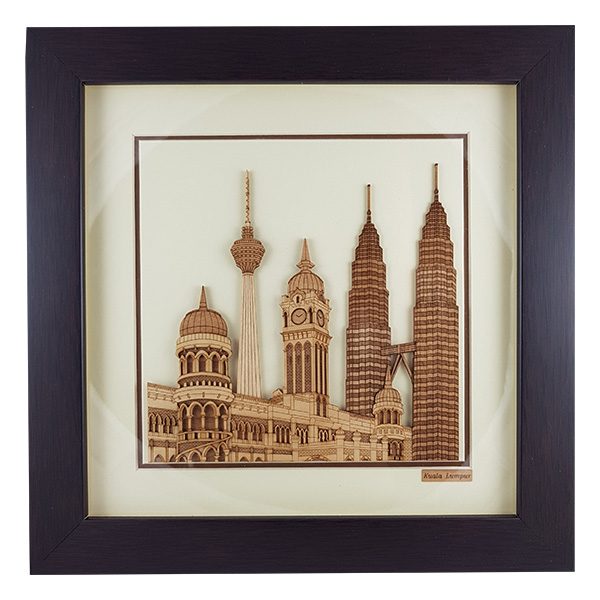
The Sultan Abdul Samad Building is a late nineteenth century building located along Jalan Raja in front of the Dataran Merdeka and the Royal Selangor Club in Kuala Lumpur, Malaysia. The building originally housed the offices of the British colonial administration, and was known simply as Government Offices in its early years. In 1974 it was renamed after Sultan Abdul Samad, the reigning sultan of Selangor at the time when construction began.
Kuala Lumpur City Centre (KLCC) is a multipurpose development area in Kuala Lumpur, Malaysia.
Designed to be a city within a city, the 100-acre site hosts the tallest buildings in the city are currently The Petronas Twin Towers, which rise 1,483 feet (452 m) in the Kuala Lumpur City Centre and were the world’s tallest buildings from 1998 to 2004.
Exclusive Christmas Design Phone Casing
Exclusive Christmas Design Phone Casing
Exclusive Christmas Design Phone Casing